
You don’t have to wait until after graduation to start thinking like a business leader. University is one of the best environments to begin building an entrepreneurial mindset. You’re surrounded by curious peers, knowledgeable professors, and endless resources, all of which can help you train your thinking for opportunity, innovation, and smart risk-taking. This is where you start breaking barriers; challenging assumptions, pushing past limitations, and exploring what’s possible. Even if you don’t plan to start your own company, this way of thinking will strengthen your problem-solving, leadership, and career confidence. It’s how you begin building your future, one decision at a time.
Key takeaways:
- Building an entrepreneurial mindset is less about launching a company and more about learning how to think creatively, take initiative, and solve problems in new ways
- Business students benefit from entrepreneurial thinking in both corporate and startup environments
- You can start cultivating entrepreneurial habits through small steps on campus, from joining clubs to launching mini projects.
What Does It Mean to Have an Entrepreneurial Mindset?
An entrepreneurial mindset is a way of thinking that helps you identify opportunities, act on ideas, and bounce back from challenges. It blends optimism with realism and pairs ambition with discipline.
Instead of waiting for perfect conditions, you learn to take action with limited resources. You ask questions like:
- What problem needs solving here?
- How can I create value for others?
- What’s the smallest step I can take to test this idea?
Building an entrepreneurial mindset also involves staying curious. It’s not just about profit or invention. It’s about seeing connections others miss, and turning knowledge into action. This mindset encourages you to stay open to feedback, experiment with new approaches, and learn continuously from real-world experiences.
Why Every Business Student Should Cultivate Entrepreneurial Thinking
You might be thinking, “What if I just want to work for a great company?” That’s a valid goal—and it’s exactly why this mindset matters.
In today’s job market, employers don’t only hire people who follow instructions. They look for people who:
- Think independently
- Propose creative solutions
- Adapt to change without losing momentum
By building an entrepreneurial mindset early, you become someone who takes initiative and adds value from day one. That matters whether you’re in a boardroom, a nonprofit, or a tech startup. It also shows that you’re not afraid to challenge outdated systems, push for innovation, and take responsibility for driving results—qualities that employers at every level appreciate.
Key Traits of Successful Entrepreneurs (and How to Develop Them as a Student)
You don’t have to be born with special talents. Many entrepreneurial traits can be practiced and strengthened during university. Here’s how to work on each one:
- Initiative: Volunteer to lead projects in your classes or clubs. Try launching something small, a study group, a blog, or even a fundraiser. Initiative shows when you move without being asked.
- Resilience: Learn from rejections by applying for competitive programs, jobs, or leadership positions. Each “no” helps build a thicker skin. Reflect on what didn’t work, and try again with adjustments.
- Adaptability: Sign up for a course outside your major. Intern in a field you’re unfamiliar with. Try rotating roles within a team project. These experiences help you adjust faster when circumstances change.
- Vision: Set time each week to journal or sketch out ideas. Notice what problems you keep running into, then explore how they might be solved. Vision comes from noticing patterns and daring to imagine solutions.
- Communication: Join speaking clubs or enter case competitions. Share your ideas in class discussions. Start writing online. Strong communication makes others believe in your ideas, and in you.
Each of these traits takes time to develop, and that’s the point. You grow your mindset the same way you grow a muscle: through regular, thoughtful practice. Over time, these habits will become second nature and shape how you approach challenges.
Practical Ways to Build an Entrepreneurial Mindset While Studying
University gives you a low-risk environment to experiment. You can try, fail, learn, and try again. That’s exactly how entrepreneurs grow.
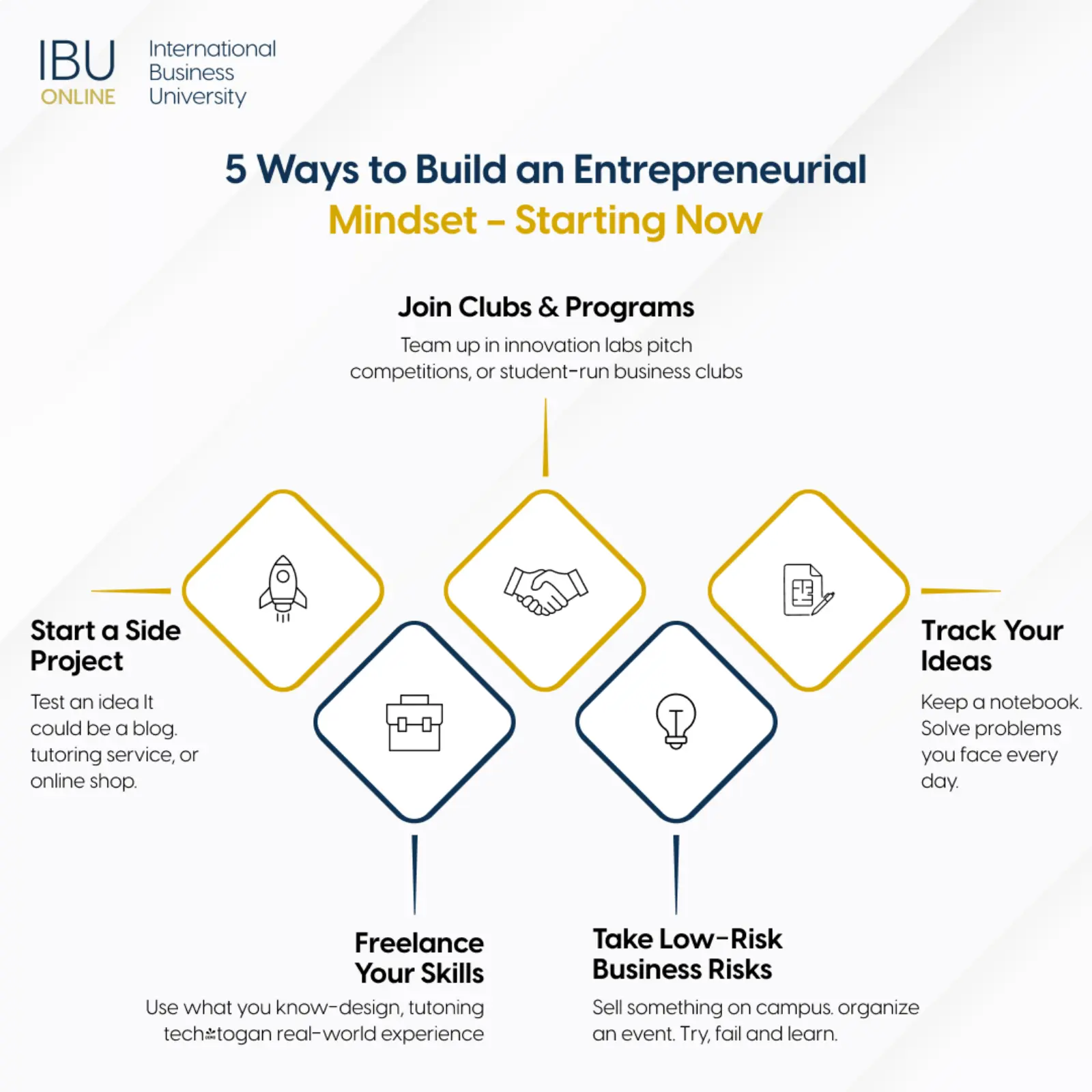
Joining Campus Clubs or Entrepreneurship Programs
Most universities offer business clubs, innovation labs, or startup competitions. These give you hands-on experience working with teams, solving real problems, and pitching ideas.
You’ll also meet peers who think like you, people who are hungry to build and learn. That network will be more valuable than any textbook.
Working On Side Projects or Freelancing
Have an idea for a service, app, or product? Try building it. Even if it doesn’t go far, you’ll learn practical skills: budgeting, marketing, customer feedback, and time management.
Freelancing is another great option. Offer tutoring, design, writing, or tech support. You’ll gain experience managing clients and projects, skills every entrepreneur needs.
Taking Business Risks in Low-Stakes Environments
Start a small campus business. Sell event tickets, design merch, or launch a newsletter. These low-stakes experiments help you get comfortable with uncertainty, testing, and quick decision-making.
University is one of the rare times in life where failure comes with little consequence and lots of learning.
Must-Read Books and Resources for Future Entrepreneurs
Here are some books that can strengthen your entrepreneurial mindset. Each one offers a unique perspective on how to think, act, and build like an entrepreneur, while you’re still in school:
- The Lean Startup by Eric Ries: This book is essential if you want to learn how to test ideas quickly and efficiently. It introduces the concept of a “minimum viable product”, a small, low-risk version of your idea that helps you learn what works before investing too much time or money.
- Start with Why by Simon Sinek: If you’ve ever wondered what drives successful leaders, this book explains how purpose-driven thinking can create powerful momentum. Understanding your “why” helps you stay focused and inspire others.
- Zero to One by Peter Thiel: This is a thought-provoking read that challenges you to create something truly original, rather than just improving what already exists. It’s a great resource for thinking deeply about innovation and market positioning.
- Rework by Jason Fried: If traditional business advice feels too rigid, this book offers a refreshing alternative. It encourages simplicity, speed, and questioning the status quo, all valuable skills when managing projects or launching ventures.
- Creative Confidence by Tom and David Kelley: This book breaks down how design thinking can help you approach problems in new ways. It’s especially useful for students who want to strengthen their creativity and solve challenges with empathy and practicality.
If you read even one or two of these during your university years, you’ll start seeing problems, and possibilities, through a sharper entrepreneurial lens.
FAQ
Do I Need To Start A Business To Have An Entrepreneurial Mindset?
No. This mindset helps in any role, consulting, marketing, finance, or operations. It’s about how you think, not just what you build. Developing this mindset during university prepares you to recognize opportunities and take initiative no matter your career path.
Is Entrepreneurship Only For Extroverts Or Tech-Savvy Students?
Not at all. Entrepreneurs come in all personalities and strengths. What matters is your willingness to learn and take initiative. Many successful entrepreneurs are introverts or non-technical, they focus on their strengths while collaborating with others.
What If I Fail At Something I Try?
Failure is feedback. The more you try, the faster you learn what works. Every entrepreneur has a history of ideas that didn’t go as planned. Each failure teaches you something valuable that improves your future decisions.
Final Thoughts: Start Thinking Like a Business Leader Today
You don’t have to wait for graduation, funding, or a breakthrough idea to start building an entrepreneurial mindset. It begins with small actions you can take now: asking better questions, solving real problems, and challenging yourself to grow. The habits you build today will shape how you lead tomorrow.
Whether you launch a startup, join a growing company, or carve out your own path, thinking like an entrepreneur gives you an edge. It helps you move forward when others hesitate. And it positions you as someone who brings fresh ideas, strong energy, and practical solutions to the table.
Start today. Your future self will thank you.