
The 10 leadership traits that actually matter are the traits that help you earn trust, build influence, and make a real difference. These traits shape how you lead and how people experience your leadership at any stage. They form the backbone of effective leadership and are visible in every interaction, decision, and challenge you face. They’re also how you start breaking barriers, overcoming doubt, defying expectations, and leading with purpose. These traits don’t depend on titles or years of experience. They reflect your character, guide your choices, and set the tone for the teams and cultures you help create. That’s how you start building futures, yours and those around you.
Key Takeaways:
- The 10 leadership traits apply at every stage, from student to CEO.
- Traits define how others experience your leadership more than titles do.
- You can build these traits long before a formal promotion.
Why Leadership Traits Still Matter in a Changing World
Leadership traits matter because people follow character, not just titles or skills. Traits like self-awareness, accountability, and vision create trust, provide stability when things shift, and guide teams through challenges. No tool or org chart change can replace that. The 10 leadership traits stand out as the foundation of lasting influence.
Skills Get You In the Door. Traits Keep You in the Room.
Your technical skills might land you a role. Maybe you’re a great coder, a sharp analyst, or a standout writer. Staying effective and earning greater responsibility depends on how you carry yourself. Traits shape whether people want to work with you again and trust you in tough moments.
The main point of being a leader is that you don’t become a leader because of a job title. Leadership is earned through action. Traits like integrity, adaptability, and clear communication show up long before the promotion arrives. People follow what they feel, and building these traits early pays off throughout your career.
The Top 10 Leadership Traits You Should Build Now
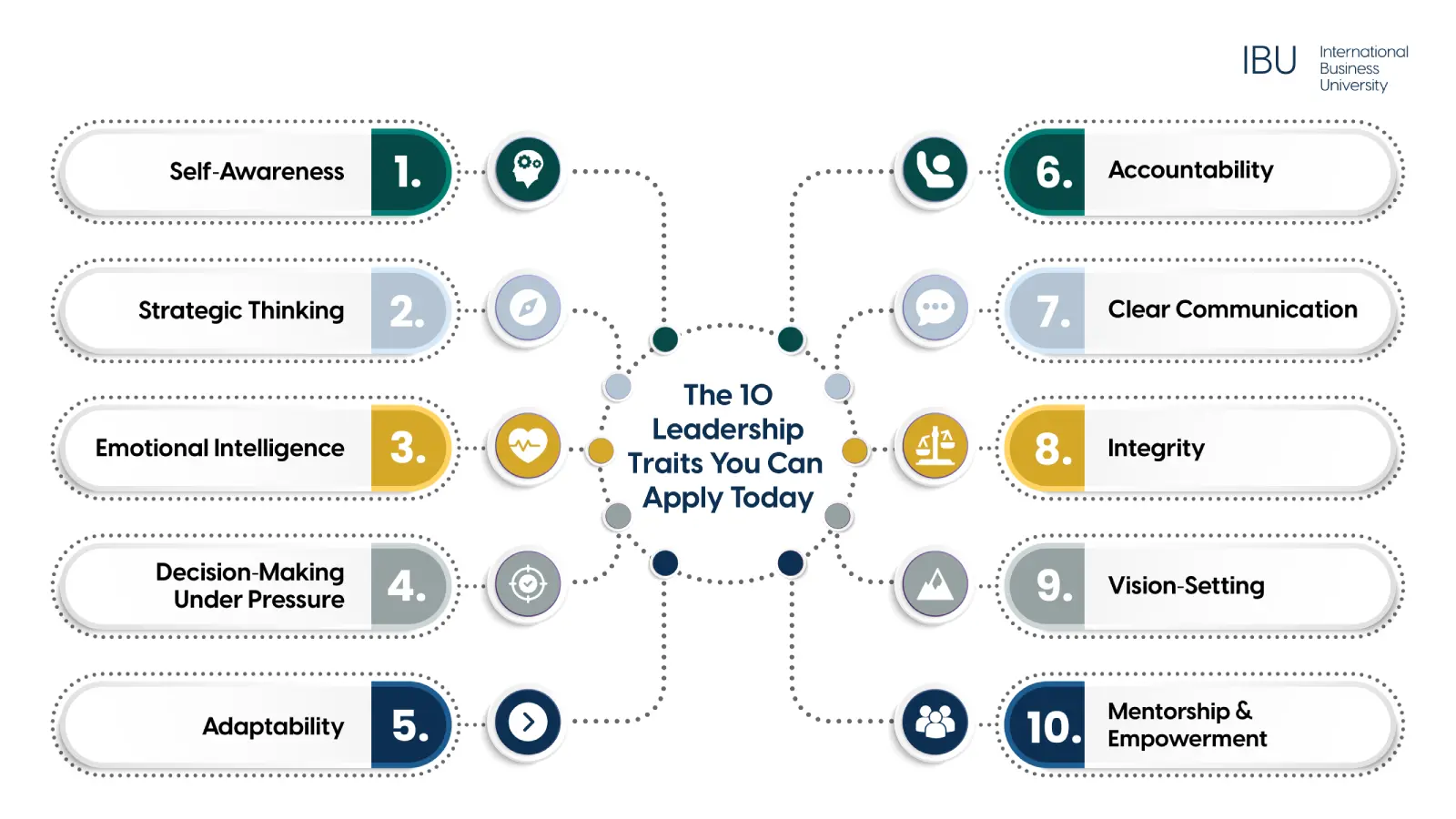
If you’re serious about long-term growth, don’t just chase skills. Develop the 10 leadership traits that quietly shape your influence over time. These aren’t buzzwords. They’re the timeless, tested traits that separate dependable leaders from those focused only on short-term wins.
1. Self-Awareness
Great leaders understand their triggers, blind spots, and strengths. They reflect honestly on what drives them forward and what can hold them back. This awareness helps them stay grounded in high-pressure moments. It also lays the foundation for emotional intelligence and stronger relationships.
How to apply this trait:
- Start a weekly reflection journal, writing down moments where you felt challenged or proud, and what you learned.
- Ask for feedback after meetings or projects, and listen without defensiveness.
- Notice your emotional reactions during stressful moments. Pause and ask yourself, Why am I feeling this way? What outcome do I want from this situation?
2. Strategic Thinking
Strategic leaders connect daily actions with long-term goals. They spot patterns early and guide teams toward opportunities. This trait helps balance short-term priorities with big-picture vision. It ensures every decision builds toward something meaningful.
How to apply this trait:
- When tackling a task, ask yourself, How does this fit into the bigger picture?
- Volunteer to help with initiatives that impact the company’s or team’s future, like planning or process improvements.
- In meetings, practice summarizing how current discussions support larger goals. This positions you as someone who sees beyond the immediate.
3. Emotional Intelligence (EQ)
EQ means tuning into people and reading situations clearly. Leaders with EQ sense team dynamics and act with empathy. They handle conflict without escalating tension. EQ builds the trust that keeps teams united.
How to apply this trait:
- Pay attention to body language and tone, not just words, when engaging with others.
- When giving feedback, balance honesty with compassion. For example, I see how hard you worked on this, and I think we can strengthen it further by…
- Before responding to tension or disagreement, take a deep breath and consider the other person’s perspective.
4. Decision-Making Under Pressure
Strong leaders make clear choices even when information is incomplete. They weigh risks quickly and move forward with confidence. This trait helps teams maintain momentum during challenges. It also earns respect by showing courage and clarity.
How to apply this trait:
- When faced with tough choices, break them down into smaller parts and list pros and cons rapidly.
- Practice making small, low-stakes decisions faster, such as project approaches or meeting formats.
- In stressful moments, communicate your plan clearly and explain your reasoning to keep others aligned.
5. Adaptability
Adaptable leaders adjust when plans change. They stay calm and turn disruptions into learning moments. This flexibility helps teams navigate uncertainty. It keeps progress steady despite shifting conditions.
How to apply this trait:
- When a project shifts direction, respond with curiosity, asking What can we learn here?
- Keep a “plan B” mindset. Before starting work, think through possible changes and how you would adjust.
- When others struggle with change, model calm and reassure them, let’s figure out our next best step together.
6. Accountability
Accountable leaders give credit when it’s due and own their mistakes. They create a culture where people feel safe to try and grow. This trait builds credibility over time. It also sets a visible standard for the team.
How to apply this trait:
- If something goes wrong, speak up first. Here’s what happened, and here’s what I’m doing about it.
- Regularly highlight others’ contributions in meetings or emails.
- Set clear personal deadlines and honour them consistently. People will notice your reliability.
7. Clear Communication
Clear communicators align teams with thoughtful, direct words. They remove confusion and reduce friction. This trait helps people focus on shared goals. It also inspires confidence in the leader’s direction.
How to apply this trait:
- Before meetings or emails, take 30 seconds to organize your main points. Keep them simple and focused.
- Check for understanding by asking, Does that make sense? Any questions before we move on?
- Replace jargon with plain language so everyone stays on the same page.
8. Integrity
Integrity means doing what’s right even when no one sees it. This trait builds trust through consistent action. People rely on leaders who match words with deeds. Integrity turns influence into lasting impact.
How to apply this trait:
- Keep your promises, no matter how small. This could mean showing up on time or following through on tasks.
- Speak up respectfully when you see something that conflicts with your values.
- When decisions affect others, consider, What’s the fair and ethical choice here?
9. Vision-Setting
Leaders with vision give teams a purpose beyond daily tasks. They show why goals matter to the team and the individual. This trait inspires motivation and commitment. It helps people see their role in something bigger.
How to apply this trait:
- When starting a project, articulate the “why” by saying, Here’s how this connects to our mission.
- Encourage teammates by showing them how their work contributes to larger goals.
- Share ideas about where your team or organization could head next. Get people thinking forward.
10. Mentorship & Empowerment
Empowering leaders helps others grow into their potential. They create space for people to take ownership and shine. This trait turns followers into future leaders. It builds strong, resilient teams that thrive together.
How to apply this trait:
- Offer to support or coach peers who want to learn something you’re good at.
- Share credit generously and highlight teammates’ strengths publicly.
- Ask others, What would help you succeed here? Then give them room to take the lead.
How These Leadership Traits Apply at Any Career Stage
The 10 leadership traits don’t belong only to CEOs. You need them from the moment you start collaborating. Traits shape how people trust and follow you. They show up in small daily actions, tough conversations, and moments when you choose to take responsibility. No title required.
- Student: Traits like accountability and adaptability help you shine in group work and stay focused on goals. They help you stay organized under pressure and handle conflicts with maturity. These traits also help you build trust with classmates. They lay the groundwork for future leadership opportunities.
- Intern: EQ and communication build trust across teams. They help you listen actively and contribute meaningfully without overstepping. Traits like humility and reliability make people want to mentor you. They help you stand out for the right reasons.
- Team Lead: Your traits influence your team in every interaction. Strategic thinking and mentorship help others thrive and grow their own capabilities. Traits like integrity and clear communication create a positive team culture. They make it easier for your team to stay focused, solve problems, and succeed together.
You Don’t Need a Title to Lead with Traits
Leadership shows up in how you step up, navigate conflict, and lift others. It’s visible in proactive actions, consistent small efforts, and how you support those around you. Traits matter more than speeches or formal authority. Real leadership starts with daily choices that reflect your values, courage, and care for others. Every small moment is a chance to lead by example and build trust.
How IBU Helps Students Build Leadership Traits That Stick
At IBU, leadership isn’t theory. It’s practice. From day one, students build the 10 leadership traits through hands-on work that demands accountability, clarity, and strategic thinking.
- Project-based learning: Real projects with real stakes build confidence and resilience.
- Feedback loops: Regular reflection sharpens self-awareness and emotional intelligence.
- Coaching and peer leadership: Mentorship helps students test ideas, recover, and improve.
- Courses beyond theory: Case studies and simulations require students to apply traits, not just know them.
FAQ
What Are The Most Important Leadership Traits For Career Success?
The 10 leadership traits that matter most for career success include self-awareness, strategic thinking, emotional intelligence, adaptability, and integrity. These traits shape how you interact with others, handle pressure, and guide teams through challenges. They help you build trust, earn respect, and stay effective at every level. Focusing on these traits prepares you to lead with character, no matter your title.
Can You Develop Leadership Traits Without Formal Training?
Yes, you can develop leadership traits through daily choices, reflection, and real-world practice. Every situation where you act with accountability, communicate clearly, or support others helps strengthen these traits. Leadership is more about consistent action than formal programs. While training can help, lasting traits come from what you do day after day.
How Do Leadership Traits Impact Team Success?
The 10 leadership traits directly affect team trust, motivation, and results. When you lead with integrity, communicate clearly, and mentor others, you create a culture where people feel safe and motivated. These traits encourage collaboration, reduce conflict, and keep teams focused on shared goals. They help teams navigate challenges with confidence and resilience.
Building Leadership Traits Before the Title
Leadership isn’t about waiting for a promotion. It’s built daily through small, consistent choices that reflect your values. Start now. Be the person who follows through, takes ownership, and seeks growth. When the title comes, it confirms what your traits have already proven: you’re a leader worth following.